Reconciliation Initiatives
CNC is dedicated to upholding Indigenous rights, supporting Aboriginal student success, and addressing issues facing Aboriginal communities. With a deep commitment to reconciliation, we are continuously working on strengthening our relationship with the Aboriginal Peoples in the region and across 22 First Nations and Aboriginal communities that welcome those seeking knowledge on their traditional territories.
Indigenization
Indigenization is a reflective journey. We travel this road together in the pursuit of incorporating Indigenous ways of knowing, being, doing, and relating into the educational and social structures of the College.
Strategic Plan
lhulh whuts’odutel’eh – Learning Together
The 2021- 2026 strategic plan is the culmination of the passion and support of many who see a strong and vibrant future for CNC.
Aboriginal Student Success
CNC provides support services to promote the success of Aboriginal students, recognizing their unique needs and strengths.
Moose Hide Campaign – May 15
Violence is unacceptable and preventable in Canada. Indigenous women, girls, and two-spirit people are victims of gender-based violence at a much higher rate than non-Indigenous people. You are encouraged to take action to end gender-based violence in Canada.
In 2011, father-daughter duo Raven and Paul Lacerte, members of the Lake Babine First Nation and Nadleh Whut'en Band, respectively, were motivated to begin the Moose Hide Campaign during their yearly moose hunt. This hunt occurred on their ancestral land along the Highway of Tears, a stretch of Highway 16 between Prince George and Prince Rupert, where numerous Indigenous women have tragically disappeared or been killed. Wearing the moose hide pin represents a dedication to honouring, respecting, and safeguarding women and children from gender-based and domestic violence. The pin serves as a symbol of unity, empathy, and support for those affected by violence.
Moose Hide Campaign Day takes place in May each year and is an opportunity to listen to Indigenous voices, honour victims and their families, and take action against gender-based violence.
Stats
Spousal violence against Indigenous women is three times higher than against non-Indigenous women
A woman or girl is murdered every two and a half days in Canada
Indigenous women are killed at six times the rate of non-Indigenous women
Statistics provided by the Moose Hide Campaign
Take the Moose Hide Pledge
Taking the Moose Hide pledge involves wearing a symbolic pin as a commitment to honour, protect, and speak out against gender-based and domestic violence, fostering a culture of respect and solidarity. CNC is currently in the process of becoming a Moose Hide Ambassador Campus.

Upcoming Events
Event Calendar Here?
Red Dress Day and MMIWG2S – May 5
May 5th is known as the National Day of Awareness for Missing and Murdered Indigenous Women and Girls and Two-Spirit People, or Red Dress Day. Red Dress Day was created in response to the staggering number of missing and murdered Indigenous women, girls, and two-spirit people. The origin of Red Dress Day is linked to the impactful art initiative by Canadian Métis artist Jaime Black. In 2010, Black launched the “REDress Project” to draw attention to the alarming number of missing and murdered Indigenous women in Canada. She displayed red dresses in various public locations, from trees to lamp posts, creating a poignant visual that highlighted both grief and strength.
Initially an art exhibit, the REDress Project evolved into a broader movement. Indigenous communities, along with their supporters, adopted the red dress as a powerful symbol for raising awareness and calling for action. Red Dress Day became an annual observance, uniting people to commemorate the lives lost, demand justice for the victims, and support their families. On this day, communities gather to remember those who are missing or have been murdered, push for systemic change, and offer solidarity to those affected by this ongoing crisis.

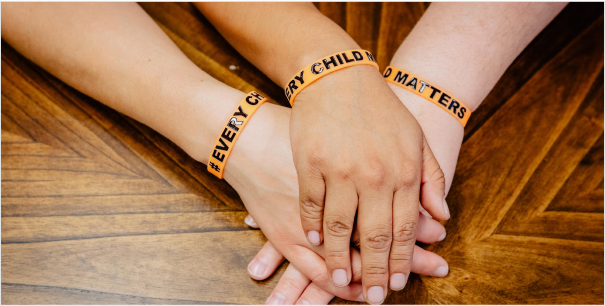
National Day for Truth and Reconciliation – September 30
Held annually on September 30th, students, staff and faculty are encouraged to wear orange as a visual commitment towards reconciliation. The day commemorates the history and legacy of the residential school system, honouring survivors, their families, and the children who never came home.
Residential school survivor, Phyllis Webstad, founded Orange Shirt Day in 2012. She shared the story of her first day at residential school at age six, when her new orange shirt, bought by her grandmother, was taken from her.
In 2023, Orange Shirt Day became nationally recognized as the National Day for Truth and Reconciliation.
Resources and Support
REES (Respect, Educate, Empower Survivors) is an online tool to report sexual violence. Trauma-informed and survivor-centric, this is a safe and judgment-free tool to report violence on and off campus. Create a record of the incident, report anonymously, access resources and more.
Select CNC from the drop-down list.
Feeling safe while on campus is very important. Security and/or First Aid is available on all campuses.
Sexual misconduct is any unwanted action carried out through sexual means or by targeting sexuality. Sexual misconduct can affect and involve people of all genders and sexual identities and can happen in any type of relationship (e.g., romantic relationships, family relationships, friendships, casual acquaintances or strangers).
Maintaining your mental and emotional health is important to academic success and personal well-being. CNC Student Services and Health and Wellness are here to support you in reaching your goals.
The Aboriginal Resource Centre (ARC) is a safe and inclusive space for Aboriginal students. TARC staff operate an open-door policy and are friendly and welcoming, while offering culturally relevant workshops, activities, discussions, and resources.
Aboriginal Liaisons are available at every campus to support cultural events and connect students with instructors or other support services at CNC.
Select your campus to connect with an Aboriginal Liaison or learn more about ARC:
For more information about resources available in your community, connect with an Aboriginal Liaison, Wellness Coach, Student Services, or the Students’ Union.